Keep every pile driver on pace
Owned and rented iron tracked from mobilization to the last demob.
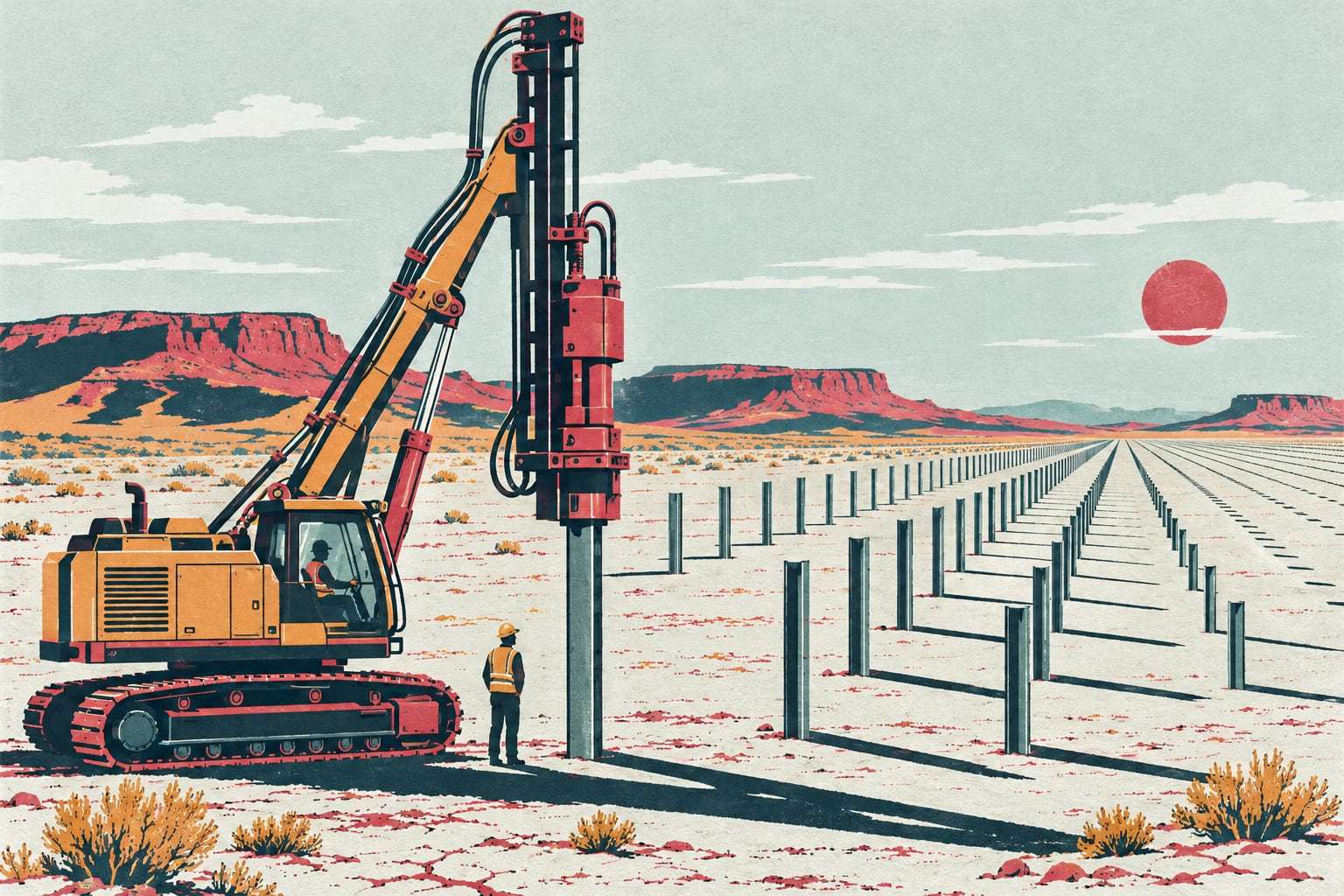
A solar build repeats one task thousands of times, so a pile driver down for a day holds up every crew behind it. Gytix tracks owned and rented machines block by block and flags rentals the week their scope ends.
Where a utility‑scale build loses days
The mid-build rental peak
At peak, rented skid steers and telehandlers can outnumber owned machines, and no one holds the full list.
Lost in the array
A telehandler parked three miles down the rows is as hard to find as a stolen one.
Signal stops at laydown
The site’s cell booster covers the laydown yard and the trailers, not the far blocks.
Demob leaves stragglers
At demobilization a trencher and two light towers stay on rent for weeks after the last crew leaves.
What a renewables builder connects first
Rental tracking
Every rented skid steer and telehandler on one list, with rate, start date and engine hours.
GPS equipment tracking
A geofence per block and laydown yard, with after-hours alerts when a machine leaves the site.
Tool and attachment tracking
T1 tags on torque tools, augers and laser levels, read by any gateway or crew phone nearby.
Satellite tracking
Position and hours by satellite every 15 minutes on sites beyond the last cell tower.
From mobilization to the peak
- Week 1
Stake out the site
We walk laydown and blocks, list every owned and rented machine, and draw a geofence per block.
- Month 1
Rentals tagged at check-in
Your site team magnet-mounts a B1 tracker on each rental at the gate, so it reports from day one.
- Month 3
Peak without waste
At the rental peak, the Friday report lists idle rentals that can go off-rent before Monday.
Mobilization, peak and demobilization
Mobilization. The first weeks bring pile drivers on tracked carriers, skid steers with augers, telehandlers for module pallets and a water truck for dust. Each one gets a gateway or a magnet-mounted B1 at the laydown yard, and each block gets its own geofence. Hours then roll up by block, so project controls can read progress in machine hours as well as piles driven. A pile driver that logs half its usual hours for two days is a breakdown, a supply gap or an operator problem, and the site manager hears about it the same afternoon.
The rental peak. Mid-project, during racking and module install, rentals stack up: extra telehandlers, compact track loaders, light towers and generators from several rental companies. Rental tracking keeps each unit’s rate, start date and engine hours on one list beside the machines you own. A telehandler that logged no hours in five days is a call to the rental desk, not a line on next month’s invoice. The same hours tell you which classes to own on the next build and which to keep renting.
Demobilization. As blocks finish, the demob list shows every machine, tool and tower still on site by block, rentals first, sorted by daily cost. T1 tags on torque tools, augers and laser levels mean the small items get found before the last trailer leaves. On wind and battery storage builds, the same list covers trenchers, cable trailers, generators and crane support equipment, and the hardware moves on to your next project.
Solar, wind and storage questions
How do you track equipment on a utility-scale solar site?
With a geofence for each block and the laydown yard, and a tracker on every machine. Owned machines take an A1 gateway or connect through their manufacturer feed, and rentals take a magnet-mounted B1 for the length of the rental. Every machine’s position and hours then show on one map, sorted by block.
Can we track rentals from several rental companies?
Yes. Rental tracking in the Command plan holds every rented machine, whichever company supplied it, with rate, start date, engine hours and location. A B1 tracker is bought once and moves from one rental to the next, so you buy the hardware once and use it for the whole build.
What happens to equipment tracking at demobilization?
The demob list takes over. It shows every machine, tool and light tower still on site by block, with rentals sorted by daily cost. Your site team works the list until it is empty, and each rental’s last engine hour and off-site date are recorded, which helps when an invoice runs past the return.
Do your trackers work on remote wind and solar sites?
Yes. Every A1 gateway stores 30 days of data and uploads it when it reaches coverage, and the A1S sends position, hours and fault codes by satellite every 15 minutes. B1 battery trackers report once a day and last up to five years, so nothing needs charging on site.
Can we move the trackers to our next project?
Yes. The hardware is yours, with a three-year replacement warranty, and plans run month to month with 30 days’ notice to cancel. Pull the B1 trackers and T1 tags at demob, take machines that leave the fleet off your plan, and reconnect the rest on the next site with no new contract.
Show us how your fleet runs
Send your fleet list. A 45-minute walkthrough on your own machines, then a written quote.