Defend every unit at budget time
Utilization, service history and replacement plans, ready for council and auditors.
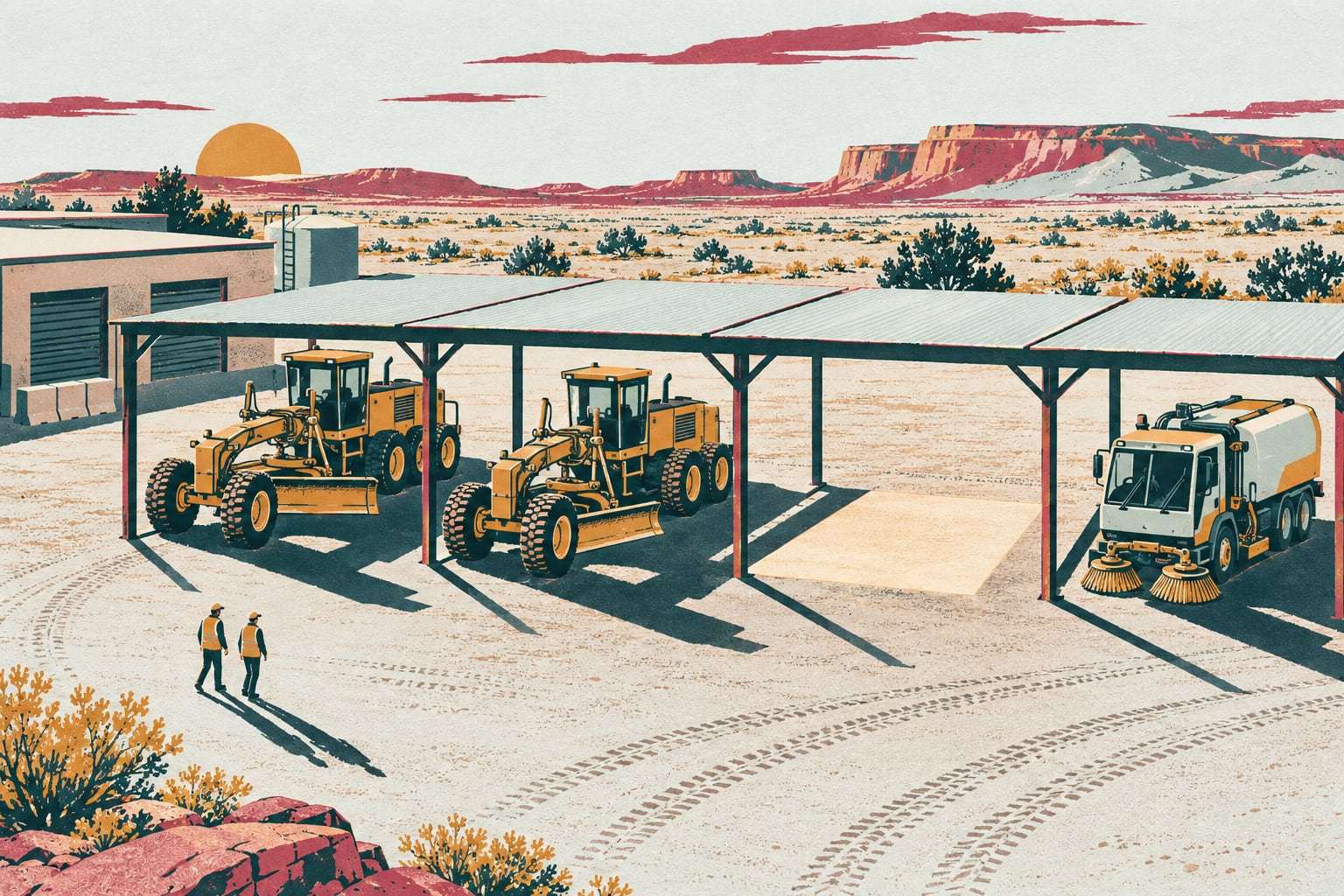
When a commissioner asks why the county owns a dozen motor graders, the answer should come from hour meters, not habit. Gytix records hours, service and cost for every unit, so replacement requests and right-sizing studies start from the fleet’s own trace.
What a public fleet must answer
Requests without hours
Replacement requests rest on model year and odometer, not hours, downtime or cost per hour.
Units nobody uses
A backhoe that runs 60 hours a year keeps its slot, its insurance and its PM schedule.
Records on request
An auditor or a resident asks where a unit was last Tuesday, and the answer takes days.
Five departments, five lists
Streets, water, parks and solid waste each keep their own unit lists, mechanics and spreadsheets.
What a public fleet connects first
Fleet right-sizing audit
A keep, share, replace or sell list from measured hours, for a fixed fee.
Utilization and cost analytics
Hours, idle time and cost per hour by unit and department, ready for budget hearings.
Preventive maintenance
Service by hours, miles or calendar, with a history that outlasts staff turnover and audits.
Field services
Our crews install, train staff in English or Spanish and stay with you through the first 90 days.
Before the next budget cycle
- Week 1
Inventory every unit
We walk each department’s yard and match units to asset tags, titles and service records.
- Month 1
Hours on every unit
Gateways or manufacturer feeds on every unit, and each department head sees their own units.
- Month 3
Budget-ready numbers
Cost per hour, utilization and downtime by unit and department, exported for the budget packet.
Replacement, right‑sizing and fuel records
Replace by condition and cost. Many public fleets replace units on age or odometer because that is what the records hold. Engine hours, downtime and repair cost per hour say more. A loader with low hours and low repair cost can serve another budget cycle, while a younger unit that keeps returning to the shop may be the one to replace first. Gytix keeps those numbers per unit, from the machine and the work orders, so the replacement plan starts from them.
Right-sizing with measured use. A right-sizing study asks whether each unit earns its place. With hours recorded on every unit for a full season, the study can show which backhoes, mowers and sweepers can be shared between departments, which need replacing and which can go to auction. Our fleet right-sizing audit does this for a fixed fee up to 150 machines, and larger fleets are quoted per fleet.
Fuel and emissions for public reporting. Agencies asked for a greenhouse gas figure can start from fuel. The EPA’s GHG Emission Factors Hub lists 10.21 kilograms of CO2 per gallon of diesel fuel, so a fleet burning 50,000 gallons a year works out to about 510 metric tons. The fuel and emissions reports in the Command plan tie each gallon to a unit and a department, so the figure can be checked line by line.
Public fleet questions, answered
How does government fleet management software support budget requests?
It replaces age-based estimates with measured numbers. Each unit’s engine hours, idle time, downtime, repair cost and cost per hour come from the machine and the shop, so a replacement request shows why a grader or loader should go, and which units could be shared between departments instead.
Can our agency buy Gytix through cooperative purchasing?
Your procurement office decides the route. Agencies buy software through cooperative purchasing agreements, formal bids or direct quotes, depending on state, county or tribal rules and the amount. Gytix gives a written quote after a walkthrough on your own fleet list, and month-to-month terms avoid a commitment that outlasts the budget cycle.
What is a fleet right-sizing study?
A right-sizing study compares the units you own with the work they actually do. Gytix’s audit measures hours and idle time on every unit, then recommends which to keep, share between departments, replace or sell. It is a fixed fee for up to 150 machines, and larger fleets are quoted per fleet.
Who owns the fleet data if the agency cancels?
Your agency does. Every record can be exported as CSV or through the API at any time, including after cancellation, so records stay in your hands for retention and public requests. Gytix never sells fleet data or shares it with manufacturers, dealers or lenders, and plans cancel with 30 days’ notice.
Do you work with tribal governments and state agencies?
Yes. Tribal governments, cities, counties and state agencies across New Mexico, Arizona, West Texas, El Paso and southern Colorado are inside our field service area, and the software works anywhere in the United States. Remote road yards with weak coverage use gateways that store 30 days of data or send by satellite.
Show us how your fleet runs
Send your fleet list. A 45-minute walkthrough on your own machines, then a written quote.